Northern Lights Possible Over Belgium This Week
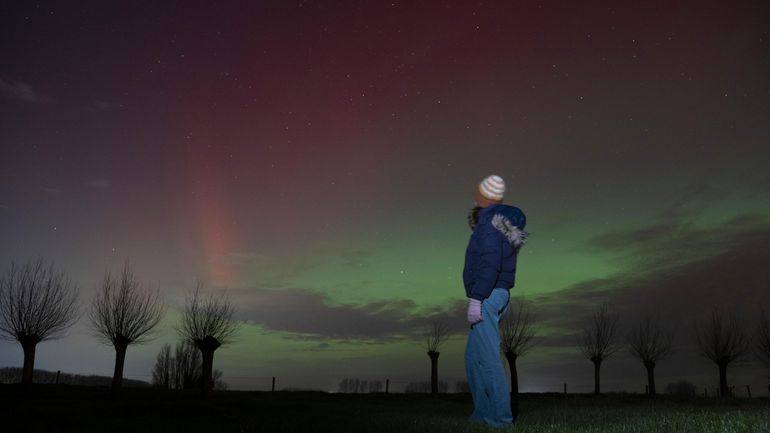
Spectacular Northern Lights are expected to illuminate Belgium and parts of Europe this Thursday evening, following a recent, intense solar flare. This rare celestial event is generating excitement among skywatchers and experts alike, driven by the potential for heightened geomagnetic activity.
The predicted aurora is a direct result of a ‘zonnewvlam’ – a solar flare – that has significantly increased the probability of geomagnetic storms. Scientists are closely monitoring the storm’s intensity, which could disrupt satellite communications and other technological systems. While the January 19th display sparked considerable interest, this current event is predicted to be even more pronounced, offering a prime opportunity for observation. Experts believe this heightened activity is linked to a series of solar events occurring over the past few weeks, intensifying the potential for widespread aurora sightings across northern Europe. The visibility will depend on cloud cover, but conditions are expected to be favorable for at least some areas.
Summarized from the sources above. Read the originals for the full story.
Highlights
Northern Lights Forecast in Belgium
A geomagnetic storm is predicted to bring the Northern Lights to visible across Belgium, following a previous display and generating excitement among skywatchers.
Solar Flare Drives Aurora Potential
A recent solar flare, or ‘zonnewvlam,’ is the cause of the geomagnetic storm and increases the chance of seeing the Northern Lights.
Rare Celestial Event Opportunity
This event presents a rare opportunity for residents of Belgium and surrounding areas to witness the Aurora Borealis.
Monitoring Storm Intensity
Experts are closely monitoring the geomagnetic storm's intensity and its potential impact on satellite communications.
Germany's Aurora Sparks Interest
A recent Northern Lights display in Germany has heightened interest in space weather and astronomy.
Perspectives
- Northern lights (Aurora Borealis) are predicted to be visible in Belgium.
- A recent solar flare is the cause of the predicted event.
- This event is considered rare and exciting for skywatchers.
- Geomagnetic activity is impacting visible light phenomena.
RTBF and VRT NWS emphasize the 'rare celestial event' and 'unique opportunity,' framing it as a spectacle.
RTBF, VRT NWS
New focuses on the potential for future sightings and the broader implications of space weather, framing it as a scientific opportunity.
New