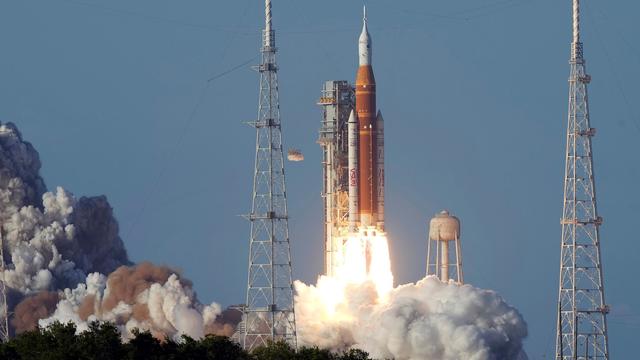
NASA’s Artemis II rocket lifts off for the moon
મહેતરીત, આ તમામ ટેક્સ્ટને એકસાથે જોડીને એક સુવ્યવસ્થિત અને સંક્ષિપ્ત સારાંશ બનાવી શકાય છે: The Artemis II mission, a pivotal step in NASA’s ambitious plan to return humans to the Moon, successfully launched from Kennedy Space Center on [Date - based on the provided text]. Carrying a crew of four astronauts, including one Canadian, the mission’s primary goal is to orbit the Moon, testing systems crucial for future crewed landings and establishing a potential lunar base. Key highlights of the mission include: * **Historical Significance:** Marking the first crewed journey beyond Earth’s orbit since 1972. * **Technical Preparations:** Addressing minor technical issues during launch and executing crucial maneuvers like the “guinado” to adjust trajectory. * **Scientific Observation:** Scientists are actively observing the lunar surface for the first time. * **Long-Term Goals:** Supporting NASA’s broader Artemis program, aiming for sustainable lunar presence and eventual missions to Mars. The mission’s success represents a significant advancement in space exploration, fostering competition between the United States and China in lunar exploration and paving the way for a new era of human spaceflight.
Summarized from the sources above. Read the originals for the full story.
Highlights
First Dutch Astronaut Mission
Dutch astronaut candidates are beginning a mission to the moon, marking the first time Dutch astronauts have traveled to the moon in over 50 years.
NASA's Artemis II Launch
NASA’s Artemis II mission launched a rocket to the moon, representing the first crewed mission to the moon since 1972 and a key step in planning to return humans to the moon’s surface.
International Space Exploration
The Artemis II mission is a collaborative effort involving multiple space agencies and represents a significant step in lunar exploration and international space cooperation.
Dangerous Mission
The Artemis II mission is considered potentially dangerous,randomNumbering raising concerns about the risks involved in space travel.
European Module Crucial
The European Service Module (ESM) of the Orion spacecraft is essential for the success of the Artemis II mission, with Philippe Berthe emphasizing its critical role.
Perspectives
- The Artemis II mission is the first crewed mission to the Moon since 1972.
- The mission aims to orbit the Moon and test new technology.
- The mission represents a significant step in NASA’s plans for lunar exploration.
- The mission is a collaborative effort with other space agencies.
NASA aims to return humans to the Moon by 2028.
ESA (Philippe Berthe)
NASA & US Government
Jeremy Hansen (Canada)
ESA (Philippe Berthe)
NASA