Ancient French skeleton reveals Gaul mystery.
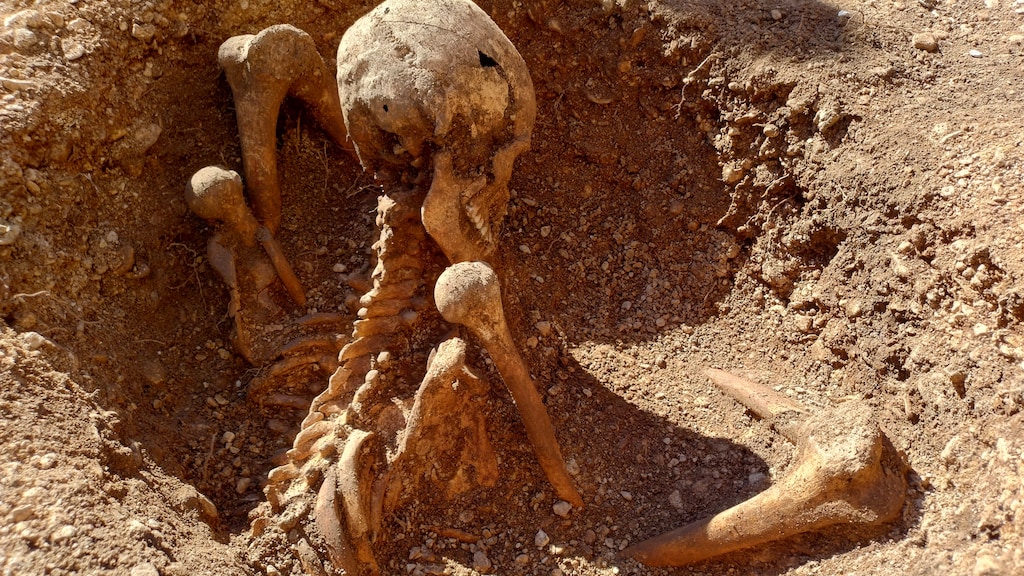
A remarkably well-preserved skeleton, found in a shallow grave near a primary school in Dijon, France, has sparked a new round of archaeological investigation. The unusual ‘upright’ position of the remains, coupled with previous discoveries of ‘sitting Gaul’ burials, is prompting experts to delve into the mysteries surrounding ancient Gallic funerary practices.
The ongoing excavations in Dijon are revealing a significant concentration of burials dating back to 400 to 200 BC, specifically the ‘Gaulois assis’ style – individuals buried in a seated position. Initial findings, including the recent discovery by schoolchildren, mirror thirteen previously identified tombs from 1992 and 2025. Scientists believe this practice, where individuals were deliberately buried in a seated posture, may hold clues about social status, religious beliefs, or even the health and age of the deceased. The sheer number of these burials suggests a complex and potentially widespread funerary tradition within the ancient Gallic population of the region. Further analysis of the skeletal remains and the surrounding archaeological context is expected to shed light on the motivations and rituals associated with these unique burials.
Summarized from the sources above. Read the originals for the full story.
Highlights
New 'Sitting Gaul' Skeletons Found
Archaeologists in Dijon uncovered five new burial sites of 'Gaulois assis,' a distinctive burial style dating back to 400-200 BC, furthering research into ancient Gallic funerary practices.
Upright Skeleton Discovery in France
A remarkably well-preserved skeleton was found sitting upright in a shallow grave near a French school, prompting investigation into its identity and burial context.
Series of Unusual Burials Emerges
Multiple discoveries of skeletons buried in seated positions are raising questions about ancient Gallic funerary rituals and societal norms.
Children's Discovery Fuels Investigation
Schoolchildren unearthed a skeletal remains, contributing to a larger archaeological puzzle surrounding the mysterious graves of the Gallic period.
Ongoing Research into Ancient Remains
Experts are actively investigating the unearthed skeletons to understand the people, circumstances, and significance of these ancient burials.
Perspectives
- A remarkably well-preserved skeleton was found in Dijon, France.
- The skeletons were found in a seated position, often facing west.
- The burials date back to the Gallic period (400-200 BC).
- Archaeologists are investigating the circumstances and significance of the finds.
Le Monde and The Guardian emphasize the ‘Gaulois assis’ tombs as a distinct and significant funerary practice, highlighting their repeated discovery and ongoing research into Gallic funerary rituals.
Le Monde, The Guardian Europe
NU.nl and RTL Nieuws frame the discovery primarily as a series of mysterious graves, focusing on the ongoing archaeological puzzle and lack of definitive answers about the purpose of the burials.
NU.nl, RTL Nieuws