Skeleton of D’Artagnan may be found in church.
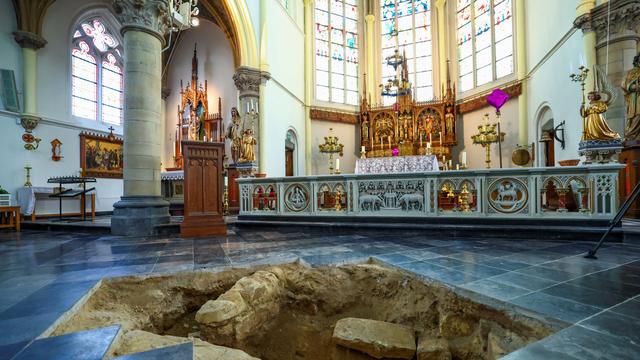
A skeleton believed to be that of Charles de Batz de Castelmore, known as D’Artagnan, the famed musketeer, has been discovered in a church in Maastricht, Netherlands. Researchers are analyzing DNA and other artifacts to confirm the identification. The discovery is generating excitement among historians and fans of the novel.
The skeleton was found during renovations of St Peter and Paul Church in Maastricht, Netherlands. It is believed to be the remains of Charles de Batz de Castelmore, the nobleman who inspired the character D’Artagnan in Alexandre Dumas’ novel ‘The Three Musketeers’. Researchers are examining a musketball and a French coin found alongside the skeleton. DNA analysis is planned to definitively determine if the remains belong to D’Artagnan, who died during the Siege of Maastricht in 1673. This discovery could provide significant insights into the life and death of this historical figure and his connection to the iconic literary character.
Summarized from the sources above. Read the originals for the full story.
Highlights
Skeleton Found in Dutch Church
A skeleton believed to be that of Charles de Batz de Castelmore, known as D'Artagnan, was discovered during renovations of a church in Maastricht.
DNA Analysis Planned
Researchers are planning to analyze DNA from the skeleton to confirm its identity.
Discovery Fuels Historical Interest
The discovery is generating significant historical interest and speculation about D'Artagnan's final resting place.
Linked to Dumas Novel
The skeleton is linked to the novel ‘The Three Musketeers’ and the historical figure who inspired it.
Potential Resolution of Mystery
The discovery could resolve a centuries-old mystery surrounding the death of Charles de Rochefort, known as Musketeer d'Artagnan.
Perspectives
- Most sources agree that a skeleton has been discovered in a church in Maastricht, Netherlands.
- The skeleton is believed to potentially belong to Charles de Batz de Castelmore, known as D'Artagnan, the musketeer.
- The discovery is generating significant historical interest and speculation about D'Artagnan’s fate.
- DNA analysis is planned to definitively determine the identity of the remains.
Some sources (NOS, NU.nl, RTL Nieuws, De Volkskrant) strongly suggest the skeleton is definitively Charles de Batz de Castelmore, the 17th-century nobleman who inspired Dumas’s ‘Three Musketeers.’ They emphasize the connection to the novel and the potential for rewriting historical accounts.
NOS Nieuws, NU.nl, RTL Nieuws, De Volkskrant
Other sources (ORF News, El País, El Mundo, RTBF) are more cautious, stating the skeleton is ‘believed to be’ or ‘potentially’ that of D’Artagnan, pending DNA analysis. They highlight the historical mystery surrounding his death and the ongoing investigation.
ORF News, El País, El Mundo, RTBF
Several sources (NU.nl, BBC Europe, The Guardian Europe, New) frame the discovery as a potential ‘resolution to a long-standing historical mystery’ and a ‘significant insight’ into a key historical figure.
NU.nl, BBC Europe, The Guardian Europe, New
Some sources (VRT NWS, RTL Nieuws) focus on the ‘excitement and speculation’ surrounding the discovery and the ‘reignites a centuries-old mystery’.
VRT NWS, RTL Nieuws